Indian Athletics 2026: A System in Transition and Growth
By Dr C Ajithkumar
International Athletics Coach
Indian athletics in 2026 reflects a significant shift from reliance on individual brilliance to the development of a structured and competitive ecosystem. The emergence of deeper talent pools, improved domestic competitions, and a promising junior pipeline indicates that the country is entering a new phase of sustained athletic growth.
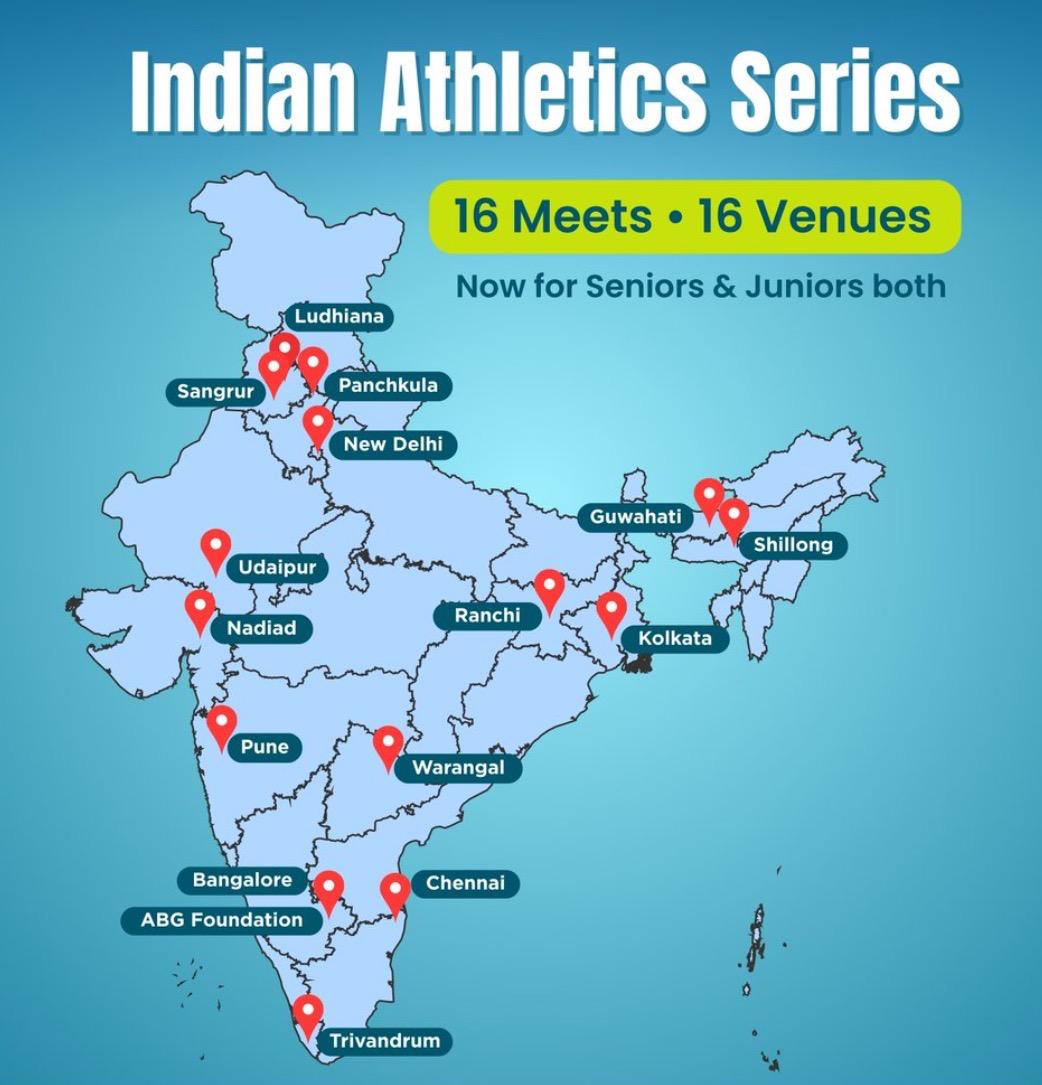
A key driver of this transformation is the Indian Athletics Series 2026 introduced by the Athletics Federation of India. With multiple competitions conducted across the country, the series has created consistent competitive exposure for athletes. Performances such as Murali Sreeshankar's 8.15 metre jump highlight successful comebacks at the elite level, while emerging athletes like Kuldeep Kumar defeating established names demonstrate the rise of new talent. Sprint events are also witnessing unprecedented participation, reflecting growing grassroots engagement.
Track Events: Emerging Strength with Clear Gaps
On the track, sprinting standards have improved, with Indian 100 metre timings stabilizing in the 10.2 to 10.6 second range domestically. However, the 400 metre event remains India's strongest discipline.
Athletes such as Rajesh Ramesh and Vithya Ramraj are leading a competitive generation, reinforcing India's global relevance in the 4 by 400 metre relay format. The relay system continues to be one of the country's most realistic prospects for international success.
Field Events: India's Medal Backbone
Field events remain India's primary medal contributors. Disciplines such as long jump and javelin throw continue to produce high-level performances, with athletes like Ancy Sojan and Shaili Singh pushing competitive standards.
India's consistent medal finishes at continental competitions further emphasize its strength in power and technique-based events.
Junior Pipeline: A Positive Indicator
Equally encouraging is the emergence of a strong junior pipeline. Young athletes such as Piyush Raj and Sahil Malik are already achieving qualifying standards for global competitions.
This reflects improved grassroots systems and signals a positive trajectory toward future Olympic cycles.
Governance and Policy Evolution
Recent policy changes by the Athletics Federation of India, including regulations on athlete sponsorship approvals, indicate a move toward greater structural control and professionalism.
While this may enhance governance, it also raises important questions regarding athlete autonomy and commercial freedom.
Global Exposure and Infrastructure Growth
India's opportunity to host the World Athletics Indoor Championships 2028 in Odisha represents a landmark moment. This event is expected to accelerate infrastructure development and provide Indian athletes with valuable exposure to world-class competition on home soil.
Performance Overview 2026
Strengths
- Dominance in field events including jumps and throws
- Strong 400 metre and relay ecosystem
- Expanding domestic competition structure
- Rising junior talent pipeline
Challenges
- Sprinting gap at the global elite level, especially in the 100 metre event
- Inconsistent medal conversion at senior international competitions
- Ongoing concerns in injury management and athlete longevity
Future Outlook
In the short term between 2026 and 2028, India is well positioned to be a strong contender at the Asian level, with relay teams capable of reaching global finals.
In the long term, if current developmental systems are sustained and strengthened, India has the potential to emerge as a leading athletics nation in Asia and progressively establish a stronger global presence by the 2032 Olympic cycle.
Conclusion
Indian athletics today is no longer dependent on isolated excellence. It is evolving into a system driven by depth, structure, and youth development.
To translate this progress into consistent global success, focused improvements in sports science, coaching standards, and international exposure are essential.
If these areas are addressed effectively, India can realistically aim for multiple Olympic medals across disciplines in the coming years.
Author
Dr C Ajithkumar
International Athletics Coach
Related Articles